Digital Customer Cards vs. Plastic Cards: Benefits and Loyalty
Why digital customer cards are replacing traditional plastic cards: lower costs, greater reach, better customer loyalty, and direct communication via Apple Wallet and Google Wallet.
'/%3e%3ccircle%20cx='14.6'%20cy='14.6'%20r='1.6'%20fill='%23DBEAFE'/%3e%3ccircle%20cx='29.6'%20cy='14.6'%20r='1.6'%20fill='%23DBEAFE'/%3e%3cpath%20d='M16.2002%2026.4C18.2002%2028.4%2020.6%2029%2023%2029C26.2%2029%2027.8002%2027.6%2029.0002%2026'%20stroke='%23DBEAFE'%20stroke-width='1.6'%20stroke-linecap='round'/%3e%3cdefs%3e%3clinearGradient%20id='paint0_linear_5405_2298'%20x1='23'%20y1='14'%20x2='0.5'%20y2='32'%20gradientUnits='userSpaceOnUse'%3e%3cstop%20stop-color='%231E40AF'/%3e%3cstop%20offset='1'%20stop-color='%230D1B49'/%3e%3c/linearGradient%3e%3c/defs%3e%3c/svg%3e)
eLoyalty Team
Aktualisiert am 01.10.2026 · 6 {value} min. Lesezeit
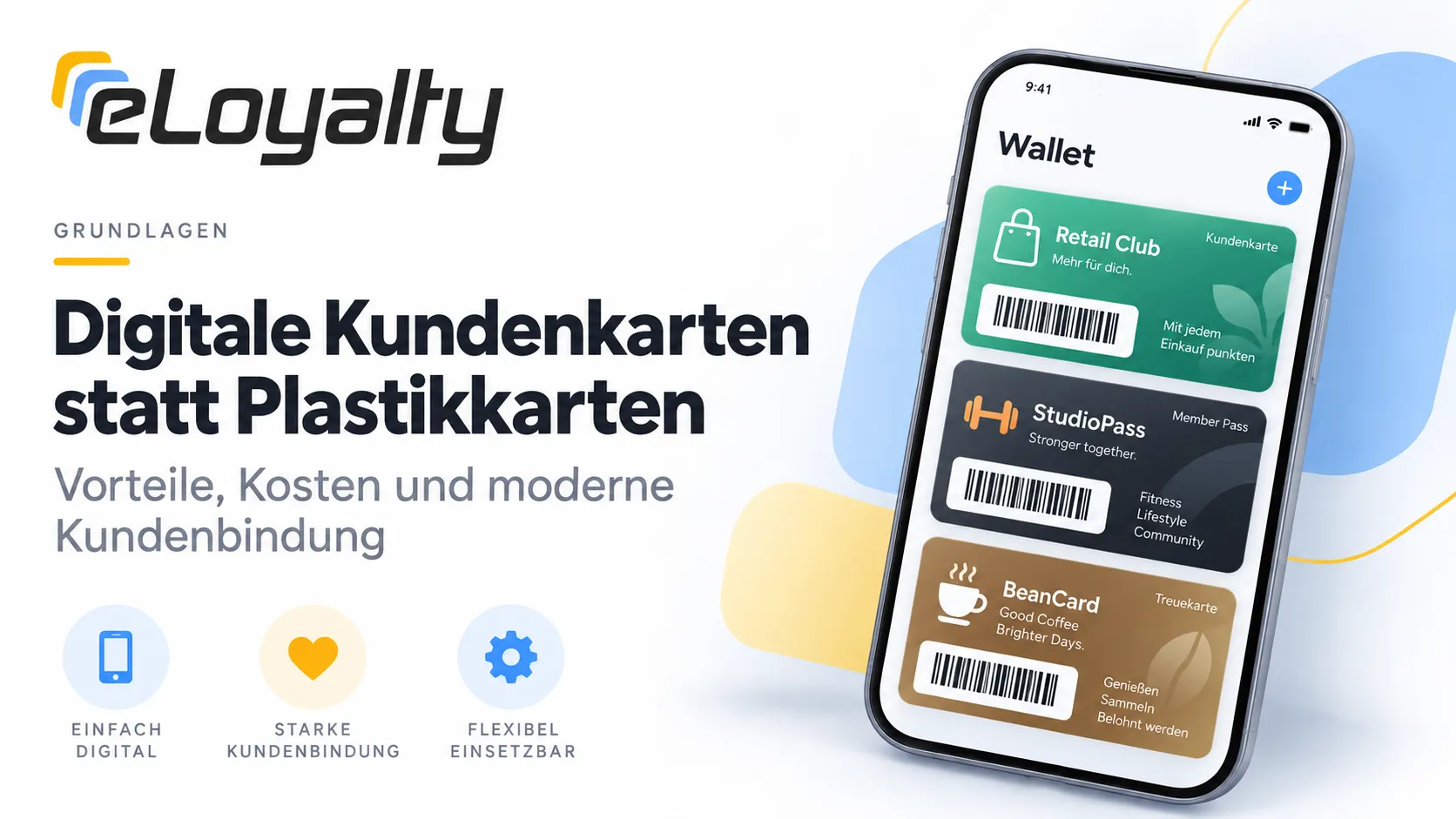
Digital customer cards are increasingly replacing traditional plastic cards in many businesses. The reason is straightforward: they save on printing and shipping costs, go directly to customers' smartphones, and create a direct communication channel via Apple Wallet and Google Wallet. For businesses, this means not only less effort but also enhanced customer loyalty.
Brief Explanation: Why Digital Customer Cards Work Better
Businesses still relying on plastic cards incur costs for storage, reprints, losses, and unnecessary process expenses. In contrast, a digital customer card can be issued in seconds, is immediately usable, and can be updated later — without needing an app download or a new card. This makes wallet cards just as appealing for small and medium-sized enterprises as they are for travel agencies, retailers, gyms, or event organizers.
Digital Customer Cards vs. Plastic Cards: The Key Difference
A plastic card is static. A wallet card is dynamic.
This is where the fundamental difference lies. A traditional card displays a code, number, or name only once, after which it remains unchanged. In contrast, a digital customer card can additionally:
- Display updated benefits
- Adjust to new promotions
- Show point balances or status
- Carry contact information and service links
- Activate via push notifications
- Be used as a ticket, membership card, or customer card
For customers, this is convenient. For businesses, it’s strategically significant because the card becomes a mobile touchpoint — not just a piece of plastic.
The Benefits of Digital Customer Cards for Businesses
1. Lower Costs Compared to Plastic Cards
Producing plastic cards involves costs beyond just printing. These include:
- Shipping
- Replacement for lost cards
- Inventory management
- Storage
- Design adjustments
- Reprints
With a digital customer card, many of these costs can be eliminated. Changes to design or content can be implemented digitally without the need to order new cards.
2. Customer Cards Are Available Instantly
A wallet card can be distributed via a link or QR code within seconds. This is particularly relevant in industries where the initial contact should quickly evolve into a relationship — such as retail, hospitality, or travel agencies.
3. Direct Communication Without an App
Many businesses want to communicate directly with their customers but face two significant hurdles:
- The app isn't installed.
- Emails are overlooked.
A wallet customer card provides a third path. It’s permanently stored on the smartphone and can be activated with relevant updates, benefits, or service information. This reduces wastage and strengthens customer connections.
4. Updatable Content Instead of Static Information
For plastic cards, everything is fixed. A digital solution can evolve:
- New opening hours
- Updated contact information
- New membership status
- Seasonal offers
- Location details
- Personal benefits
This keeps the card relevant — preventing it from becoming a dead asset in the wallet.
Which Industries Benefit from Digital Customer Cards?
A common misconception is that "this is only for large retail chains." In reality, digital customer cards work particularly well in sectors where businesses want to maintain regular contact with customers.
Typical Use Cases
- Travel & Tourism: Customer cards, travel companions, myTravelCard, service information
- Retail: Loyalty cards, couponing, status benefits
- Fitness & Associations: Membership cards, check-in, course information
- Hospitality: Loyalty cards, bonus programs, event announcements
- Events & Tickets: Admission, guest programs, upgrades
- Services & Crafts: Service passes, maintenance, customer loyalty
Practical Example: Travel Agency Instead of Plastic Card
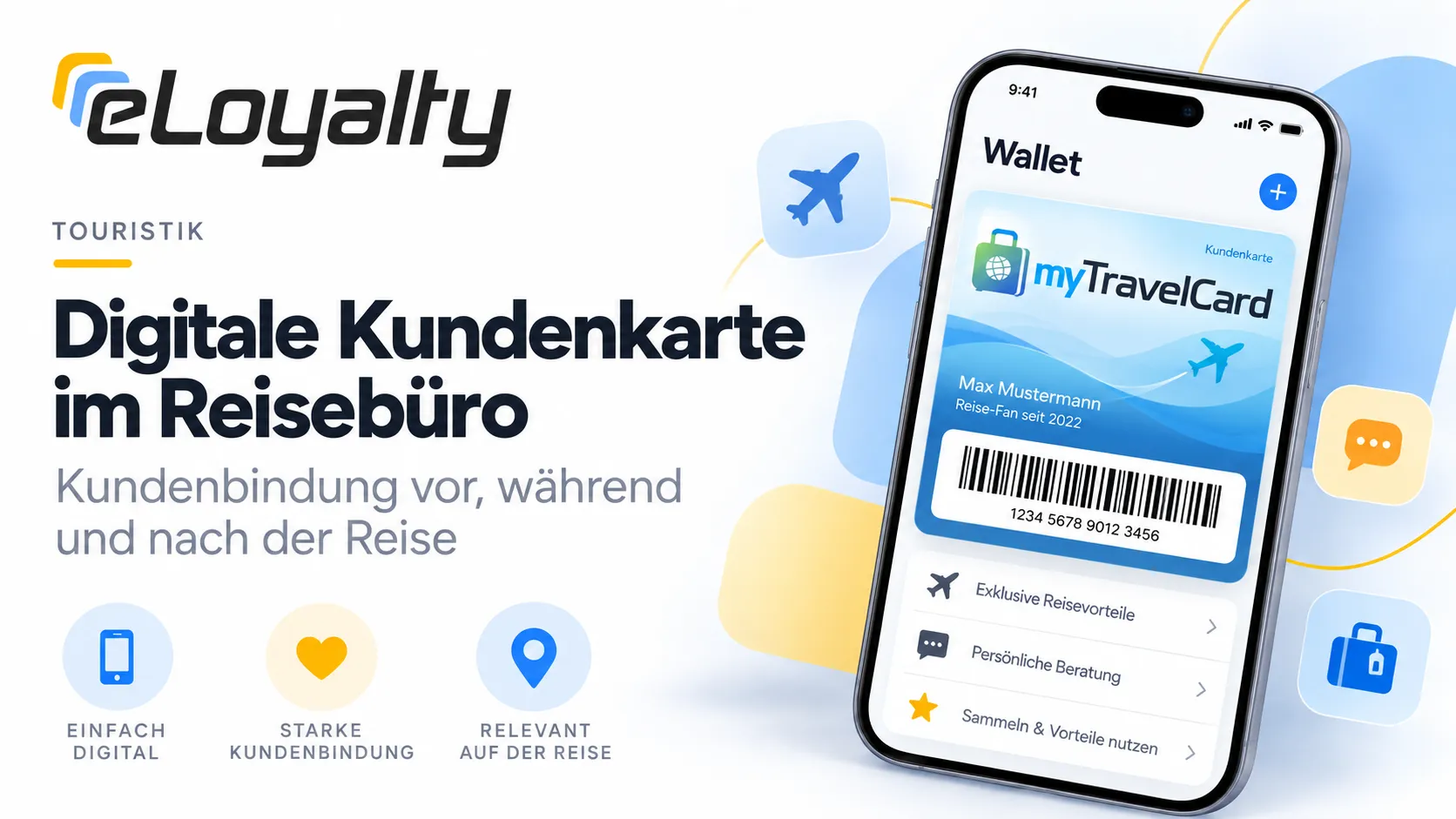
A travel agency often faces a well-known problem: after booking, the digital connection breaks off. With a digital customer card based on eLoyalty or myTravelCard, the travel agency remains visible — before, during, and after the trip.
The pass can serve not only as a customer card but also as:
- Travel information in the wallet
- Service contact
- Carrier for entry and destination information
- Channel for timely push notifications
- Starting point for upselling or reactivation
This transforms the customer card into a digital travel companion.
Why Apple Wallet and Google Wallet Are So Important
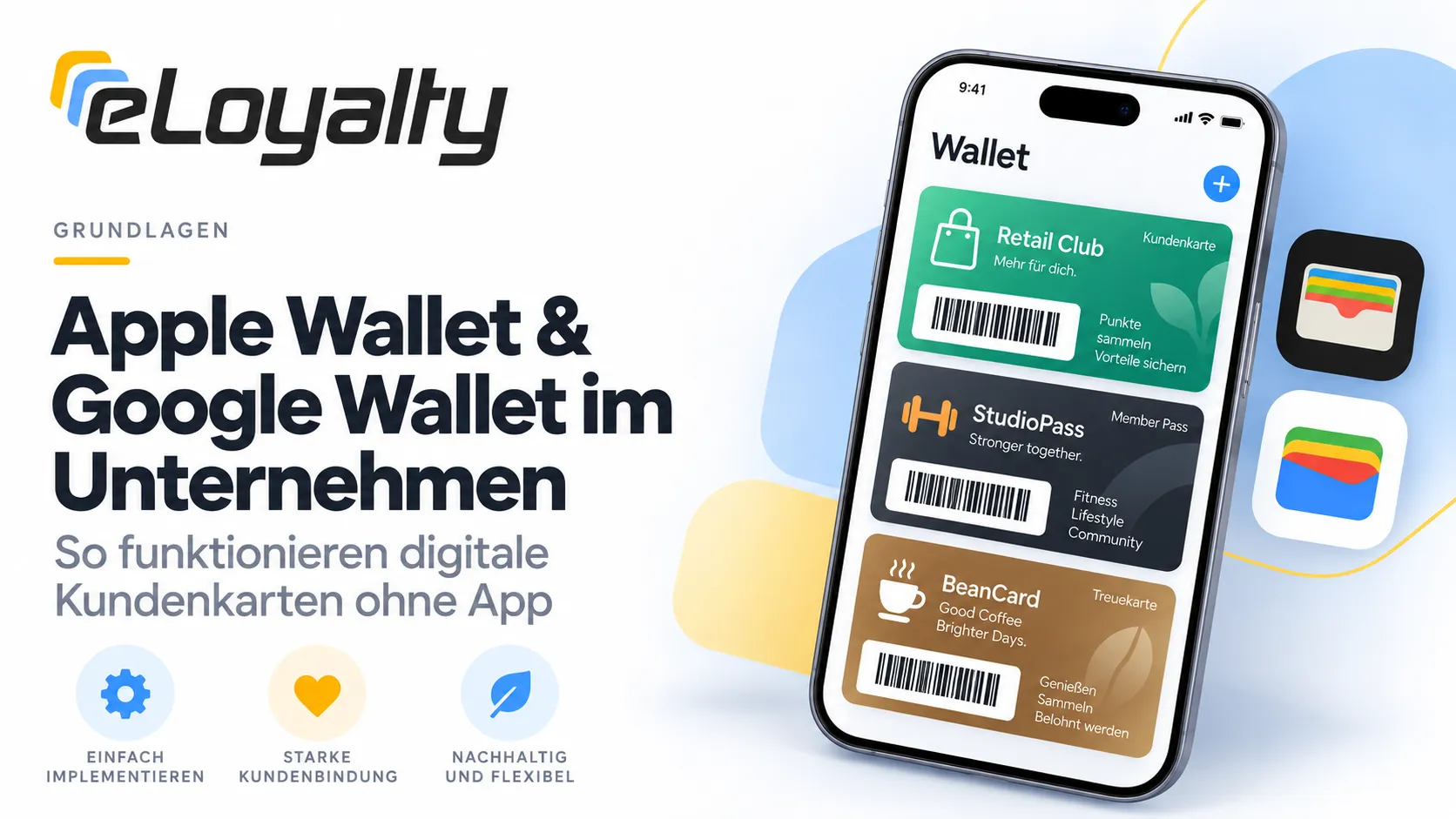
When businesses talk about digital customer cards, it's almost always about Apple Wallet and Google Wallet. The reason is pragmatic: both wallets are familiar to users and require no additional app.
This greatly lowers the entry barrier. Customers don’t have to learn a new platform; they simply save their card in the wallet — right alongside tickets, boarding passes, or payment methods.
What a Good Digital Customer Card Should Include
Not every wallet card is automatically good. For a strong start, it should include at least five elements:
- Clear Branding: Logo, color, recognizability
- Unique Identification: QR code, barcode, or customer number
- Immediate Benefits: Advantage, service, or membership benefit
- Updatable Content: No entirely static card
- Relevant Communication: Preferably a few quality prompts rather than constant noise
With eLoyalty, such wallet passes can be centrally managed, updated, and utilized across various industries. myTravelCard is the travel-oriented variant designed for modern travel communication and digital customer loyalty.
Why Digital Customer Cards Are Also an SEO Topic
Those searching for solutions in digital customer loyalty don’t just look for "customer cards." Relevant search queries today include:
- digital customer cards
- customer card apple wallet
- wallet customer card
- digital loyalty solutions
- customer card without an app
- alternatives to plastic cards
Therefore, it makes sense to address these terms not only on product pages but also in informative articles. This makes content around digital customer cards particularly valuable for websites like eloyalty.io.
What Should Companies Consider When Choosing a Provider?
When comparing different providers — such as eLoyalty, YourPass, PassCreator, or Kortpress — it’s crucial not to focus solely on price. More important questions include:
- Does the solution support Apple Wallet and Google Wallet seamlessly?
- Can the card be updated?
- Are push notifications possible?
- Are there multi-tenant capabilities or industry templates?
- How well does the solution fit into the business's processes?
- Are data protection, hosting, and support transparent?
For tourism, loyalty, and service-oriented customer relationships, it’s especially important that the card not only functions technically but can also be employed communicatively in a sensible manner.
Frequently Asked Questions About Digital Customer Cards
What is a digital customer card?
A digital customer card is a customer or membership card that is not issued as a plastic card but is stored directly in Apple Wallet or Google Wallet.
What advantages do digital customer cards have over plastic cards?
They save costs, are immediately available, updatable, and enable direct communication without an app.
Do you need an app for digital customer cards?
No. That’s one of the biggest advantages. Wallet cards typically work without additional apps because they are stored in existing wallets.
Which industries are suitable for digital customer cards?
For almost all industries with recurring customer contacts: tourism, retail, fitness, hospitality, events, membership models, and many service sectors.
Conclusion: Plastic Cards Fade, Wallet Cards Thrive
The shift from plastic cards to digital customer cards is more than just a technical modernization. It transforms how businesses build, maintain, and activate customer relationships.
With eLoyalty and myTravelCard, wallet cards can be utilized in ways that not only look good but are genuinely useful in everyday life: as customer cards, service channels, and communication platforms right on the smartphone.
Auf dieser Seite
- Brief Explanation: Why Digital Customer Cards Work Better
- Digital Customer Cards vs. Plastic Cards: The Key Difference
- The Benefits of Digital Customer Cards for Businesses
- Which Industries Benefit from Digital Customer Cards?
- Practical Example: Travel Agency Instead of Plastic Card
- Why Apple Wallet and Google Wallet Are So Important
- What a Good Digital Customer Card Should Include
- Why Digital Customer Cards Are Also an SEO Topic
- What Should Companies Consider When Choosing a Provider?
- Frequently Asked Questions About Digital Customer Cards
- Conclusion: Plastic Cards Fade, Wallet Cards Thrive