Apple Wallet & Google Wallet in Business: Digital Loyalty Cards Without an App
How businesses use Apple Wallet and Google Wallet for digital loyalty cards: functionality, advantages, differences, and typical use cases.
'/%3e%3ccircle%20cx='14.6'%20cy='14.6'%20r='1.6'%20fill='%23DBEAFE'/%3e%3ccircle%20cx='29.6'%20cy='14.6'%20r='1.6'%20fill='%23DBEAFE'/%3e%3cpath%20d='M16.2002%2026.4C18.2002%2028.4%2020.6%2029%2023%2029C26.2%2029%2027.8002%2027.6%2029.0002%2026'%20stroke='%23DBEAFE'%20stroke-width='1.6'%20stroke-linecap='round'/%3e%3cdefs%3e%3clinearGradient%20id='paint0_linear_5405_2298'%20x1='23'%20y1='14'%20x2='0.5'%20y2='32'%20gradientUnits='userSpaceOnUse'%3e%3cstop%20stop-color='%231E40AF'/%3e%3cstop%20offset='1'%20stop-color='%230D1B49'/%3e%3c/linearGradient%3e%3c/defs%3e%3c/svg%3e)
eLoyalty Team
Aktualisiert am 01.10.2026 · 6 {value} min. Lesezeit
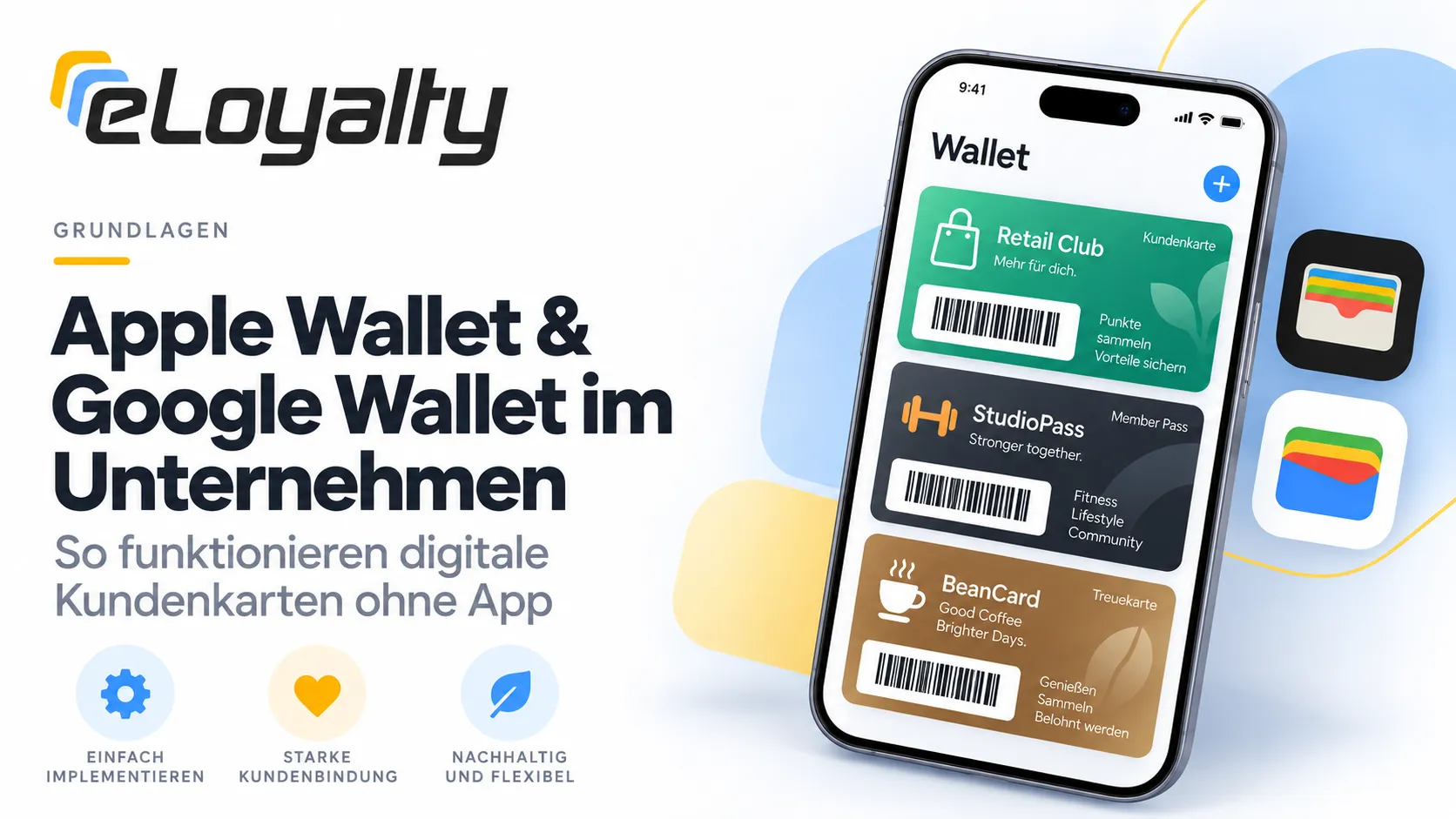
Apple Wallet and Google Wallet are the fastest routes for many businesses to implement digital loyalty cards. Instead of developing a dedicated app, the loyalty card is stored directly in the existing Wallet. This is where the major advantage lies: low barriers for customers, high visibility on smartphones, and a solid foundation for modern digital customer engagement.
Brief Explanation: What is a Wallet Loyalty Card?
A Wallet loyalty card is a digital card stored in Apple Wallet or Google Wallet. It can contain customer numbers, barcodes, QR codes, status, benefits, links, or updated information. Companies use such cards as:
- Loyalty card
- Membership card
- Service pass
- Event or ticket pass
- Travel companion
Why Apple Wallet and Google Wallet Are So Attractive
Many digital projects fail due to a simple question: "Will the target audience really install a new app for this?" The honest answer is often: no.
Apple Wallet and Google Wallet solve this problem. The channel already exists. Users know it, trust it, and often use it for tickets, boarding passes, or payment processes.
For businesses, this means:
- no need for a dedicated app
- easier distribution
- fewer technical barriers to entry
- high mobile visibility
- faster start of new use cases
Apple Wallet vs. Google Wallet: What Are the Differences?
For most businesses, the similarities are more important than the differences: Both systems allow digital loyalty cards. However, there are minor differences in detail.
Similarities
- Cards can be stored digitally
- Barcodes and QR codes can be used
- Designs can be customized to match the brand
- Content can be updated
- Location and time contexts can be utilized
- Push-like or update-based mechanics support the use case
Differences
- Apple Wallet is deeply integrated into the iPhone ecosystem.
- Google Wallet is designed for Android.
- Display, interaction, and some detailed functions vary slightly.
- For companies, it's primarily important that a solution effectively serves both worlds.
That's where a platform like eLoyalty becomes relevant: it helps to centrally manage wallet passes and distribute them consistently across different devices.
Typical Use Cases in Business
1. Digital Loyalty Card
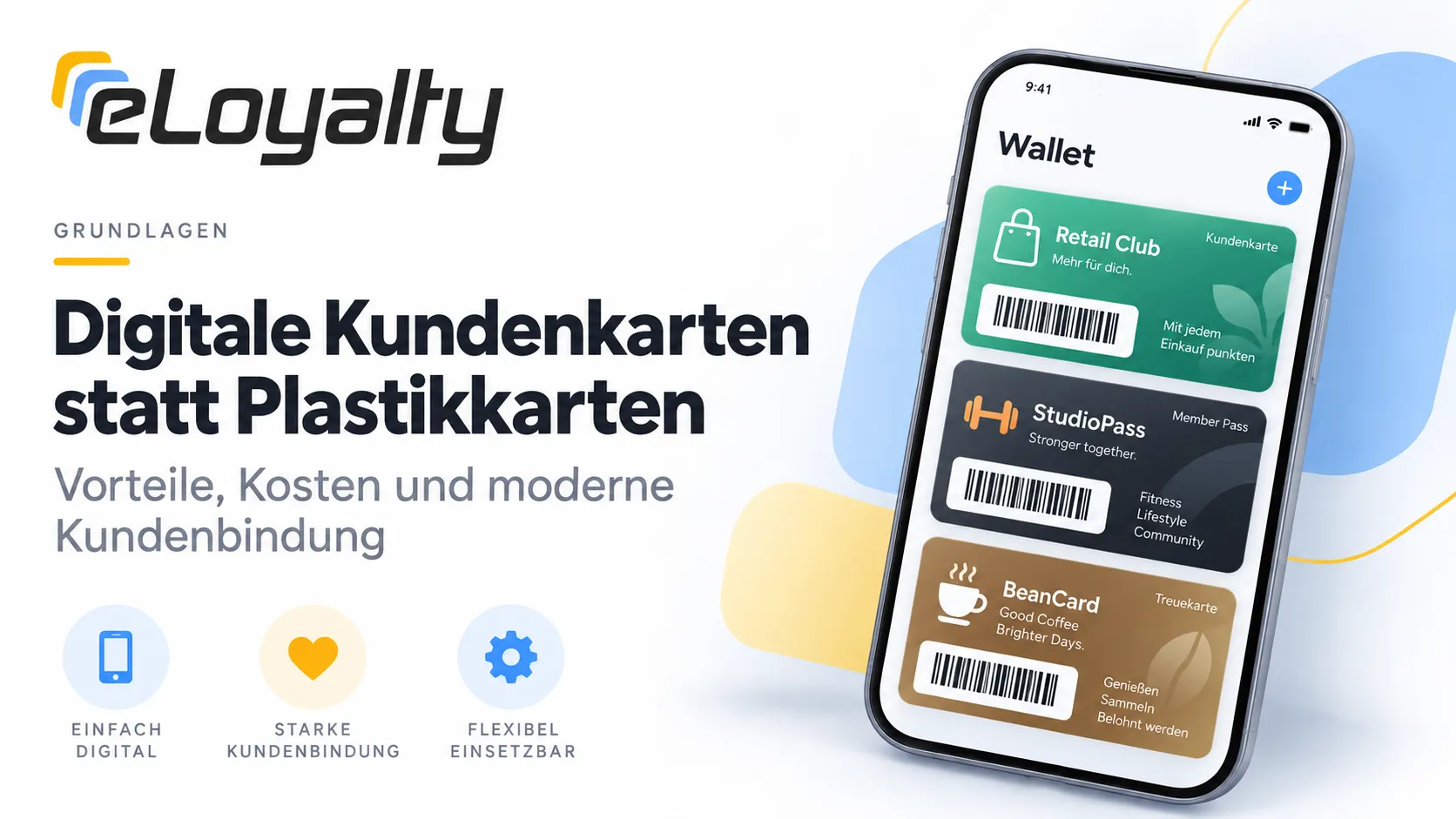
The most well-known case: The loyalty card replaces the plastic card. Customers scan a code, collect points, or identify themselves when shopping.
2. Loyalty and Membership
Status levels, benefits, and membership perks can be displayed conveniently in the Wallet. This is often more intuitive than a PDF confirmation or an email program.
3. Events and Tickets
A wallet pass can bundle entry, seating information, or additional services.
4. Tourism and Travel
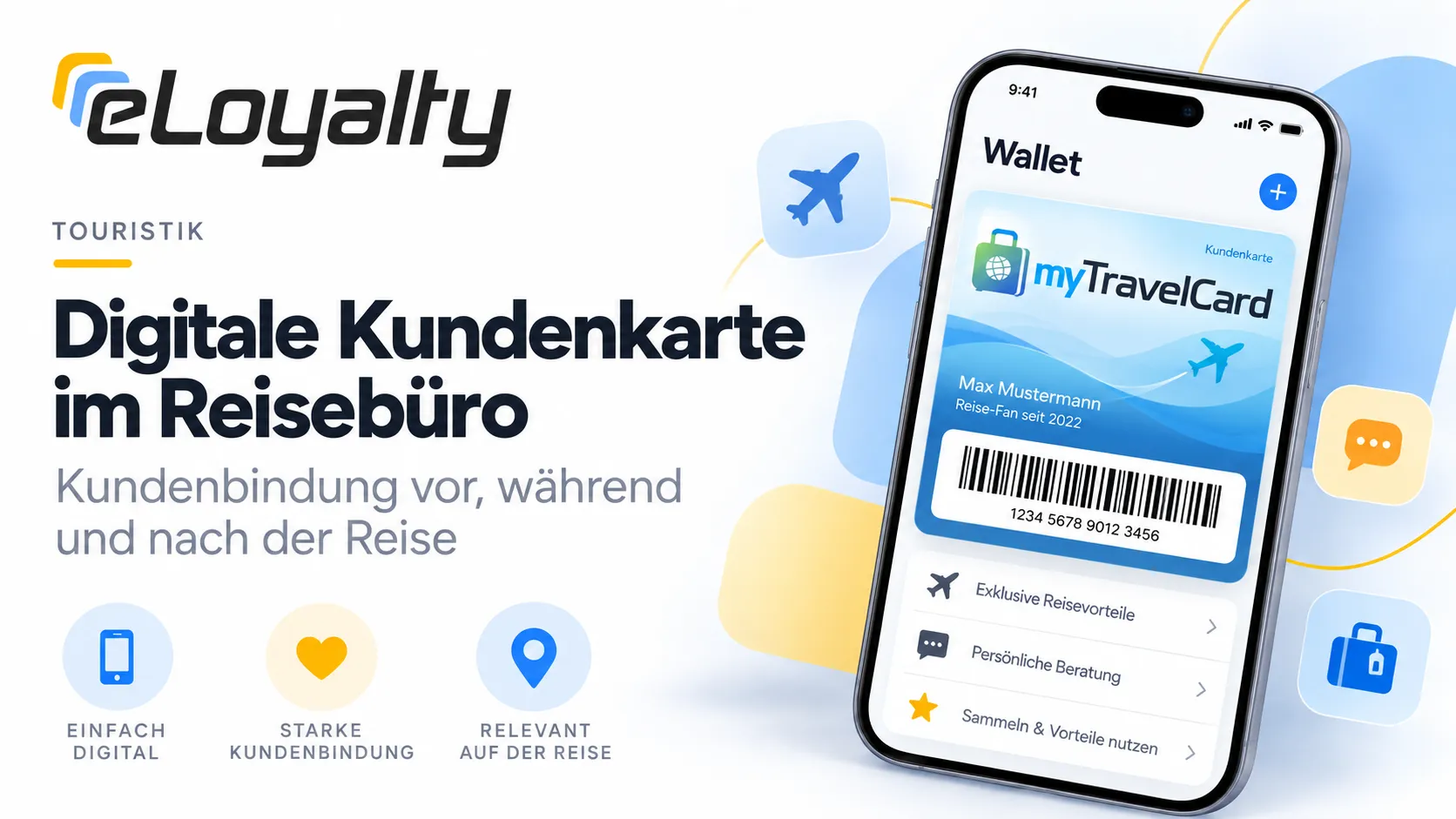
With myTravelCard, the wallet pass becomes a digital travel companion: customer card, service contact, travel info, and loyalty channel all in one.
5. Service and After Sales
Even outside traditional loyalty systems, a wallet pass can be useful—for maintenance, check-ins, contacts, or updated service information.
What Businesses Need for an Effective Wallet Card
Not every digital card automatically fulfills its purpose. A good wallet card should be:
Clear
Users must immediately recognize what the card is and what benefits it provides.
Useful
A mere placeholder "for later" isn't enough. It needs to provide immediate benefits: check-in, perks, service, travel information, appointment links, or membership functions.
Updatable
The major advantage of the wallet channel lies in its dynamism. If content is never changed, potential remains untapped.
Well-Designed
Wallet cards function on small displays. Contrast, readability, and a simplified information design are crucial.
Practical Example: Apple Wallet and Google Wallet in the Travel Agency
In a travel agency, a digital loyalty card can serve multiple purposes:
- Identification
- Branding of the travel agency
- Destination and travel information
- Contact with the tour guide or travel agency
- Push notifications regarding travel phases
- Re-engagement after the trip
This is precisely why the wallet solution is particularly exciting in tourism. A simple card transforms into a relationship-oriented service interface.
Why “Without an App” Is a Real Competitive Advantage
"Without an app" may seem like a minor technical decision, but it is strategically significant.
An app requires:
- Download
- Onboarding
- Storage space
- Recurring usage
- Maintenance
- Updates
A digital loyalty card in the wallet primarily needs one thing: a good reason to be saved. This makes the entry into modern customer engagement significantly easier—especially for small and medium-sized enterprises.
How eLoyalty Supports Businesses with Wallet Cards
eLoyalty is designed not just to create wallet passes but also to utilize them as communication and service channels. Companies can structure, distribute, customize, and effectively implement digital loyalty cards in daily operations. In the tourism context, myTravelCard complements this approach with travel relevance, service information, and timely customer communication.
Common Mistakes with Wallet Cards
Too Much Text
Wallet cards are not brochures. The interface must remain streamlined.
No Clear Benefit
If the card only "looks nice," it often gets ignored.
No Communication Strategy
Failing to thoughtfully implement push notifications and updates can quickly lead to loss of relevance.
Only Considering One Operating System
Businesses should consider both Apple Wallet and Google Wallet.
Important Search Terms for Businesses
When selecting a solution, companies often search for very specific terms—like:
- apple wallet loyalty card
- google wallet loyalty card
- wallet pass business
- digital loyalty card without an app
- apple wallet for businesses
- create wallet pass
That's why it's valuable to create content that answers these questions comprehensively. Search engines will recognize that a site is not just engaging in product marketing but providing genuine guidance.
FAQ: Apple Wallet & Google Wallet in Business
What is the difference between Apple Wallet and Google Wallet?
Apple Wallet operates in the Apple ecosystem, while Google Wallet runs in the Android ecosystem. For businesses, the key point is that both systems are supported.
Do you need a dedicated app for wallet cards?
No. This is one of the biggest advantages. The card is stored in the existing Wallet.
Can businesses update customers' cards in the Wallet?
Yes. This updatability is one of the key differences compared to plastic cards.
Are wallet cards suitable for small businesses?
Yes. Especially small and medium-sized enterprises benefit because they can build digital customer engagement without extensive app development.
Conclusion: Wallet is Infrastructure, Not a Gimmick
Apple Wallet and Google Wallet are not just trendy extras. They are practical infrastructures for digital loyalty cards—fast, low-barrier, and applicable to many industries right away.
For those seeking a modern solution for customer engagement, service, and mobile visibility, the Wallet offers a strong entry point. With eLoyalty and myTravelCard, it becomes a system that unifies brand presence, loyalty, and communication.
Auf dieser Seite
- Brief Explanation: What is a Wallet Loyalty Card?
- Why Apple Wallet and Google Wallet Are So Attractive
- Apple Wallet vs. Google Wallet: What Are the Differences?
- Typical Use Cases in Business
- What Businesses Need for an Effective Wallet Card
- Practical Example: Apple Wallet and Google Wallet in the Travel Agency
- Why “Without an App” Is a Real Competitive Advantage
- How eLoyalty Supports Businesses with Wallet Cards
- Common Mistakes with Wallet Cards
- Important Search Terms for Businesses
- FAQ: Apple Wallet & Google Wallet in Business
- What is the difference between Apple Wallet and Google Wallet?
- Do you need a dedicated app for wallet cards?
- Can businesses update customers' cards in the Wallet?
- Are wallet cards suitable for small businesses?
- Conclusion: Wallet is Infrastructure, Not a Gimmick